
There’s been a fair chunk of work looking at how dung beetles (Coleoptera: Scarabaeoidea) can influence greenhouse gas emissions (GHG) from pasture systems by altering dung decomposition processes. Namely – the same anaerobic microbes that make cows and other ruminants belch out methane – continue to live in the cow dung (which itself is largely anaerobic). But when those beetles arrive, begin to tunnel, and get active – oxygen is introduced, and those microbes are swapped out for species with aerobic respiration – and less methane is emitted over the course of decomposition.
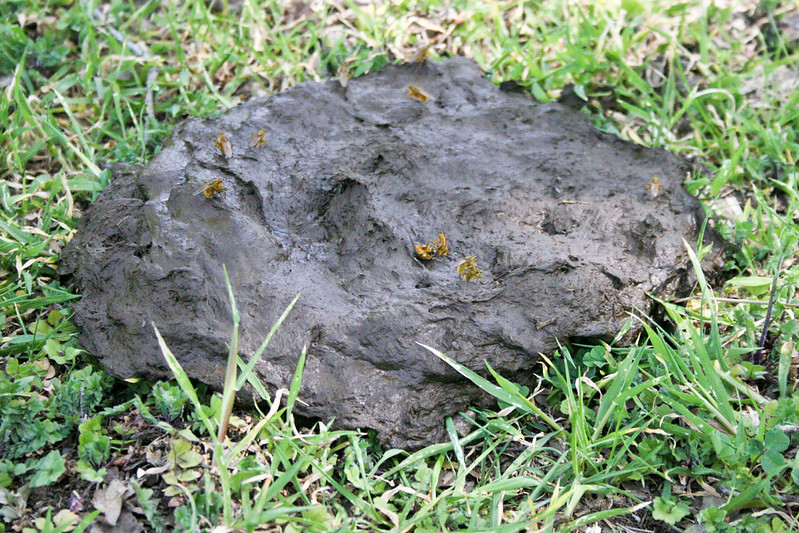
However, the magnitude and direction of the effect of dung beetle presence on dung GHG emissions are not consistent across studies! Though usually, beetle activity means less methane is emitted, sometimes the activity of beetles means more methane is emitted, and other times still there is no effect of beetles whatsoever.
In a very cool study led by Samantha Bennett (MSc ’25), Sam asked whether this difference might be explained due to variations in experimental practices. Particularly in two dimensions of an important piece of the equation: the dung. If you’re studying a dung pat, does the size and shape matter? Turns out.. they do!
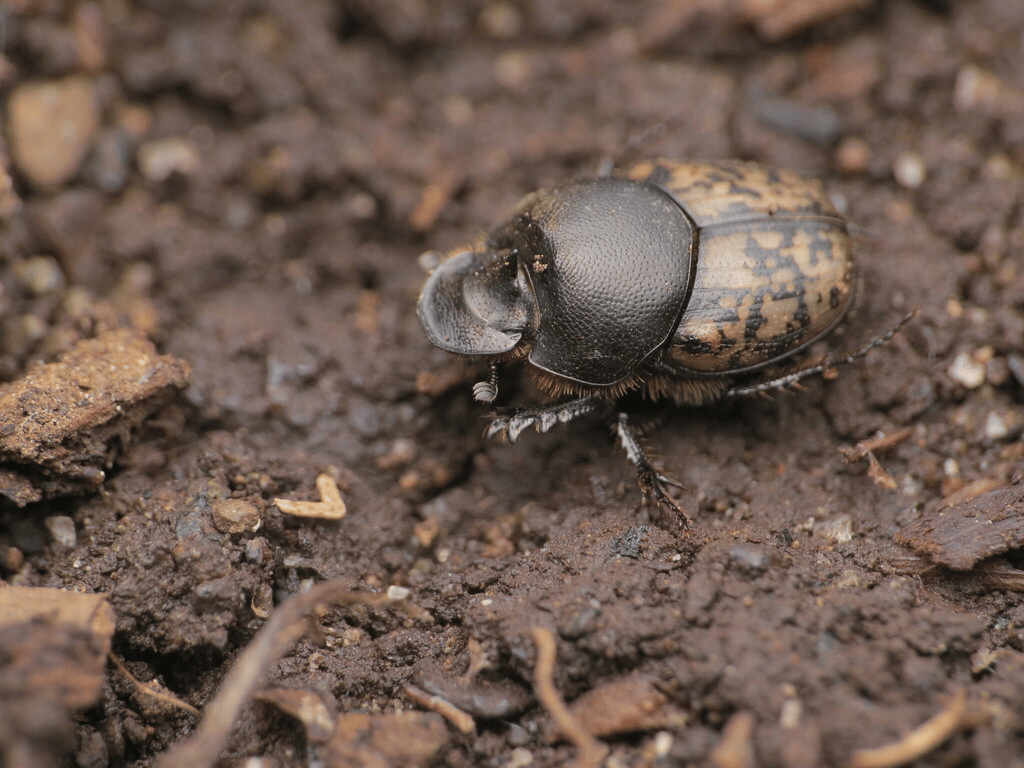
Using a laboratory experiment, Sam assessed the effects of our old favourite dung beetle – Onthophagus nuchicornis presence, dung shape, and dung mass on dairy cattle dung GHG emissions over a 21-day period. Her results revealed that dung mass can significantly impact the effect of dung beetle presence on dung emissions. Here, I’m just summarizing the work for CH4 (methane), but we measured CO2 and N2O too. ^_^
In the absence of dung beetles, simply flattening a small (100 g) dung pats resulted in a 44% reduction in CH4 emissions, while flattening 400 g dung pats reduced CH4 emissions by 13%. By comparing dung pats with and without beetles, beetle activity in flattened dung pats resulted in a 72% reduction in CH4 emissions, whereas their presence in non-flattened dung pats only resulted in an 8% reduction in CH4 emissions!
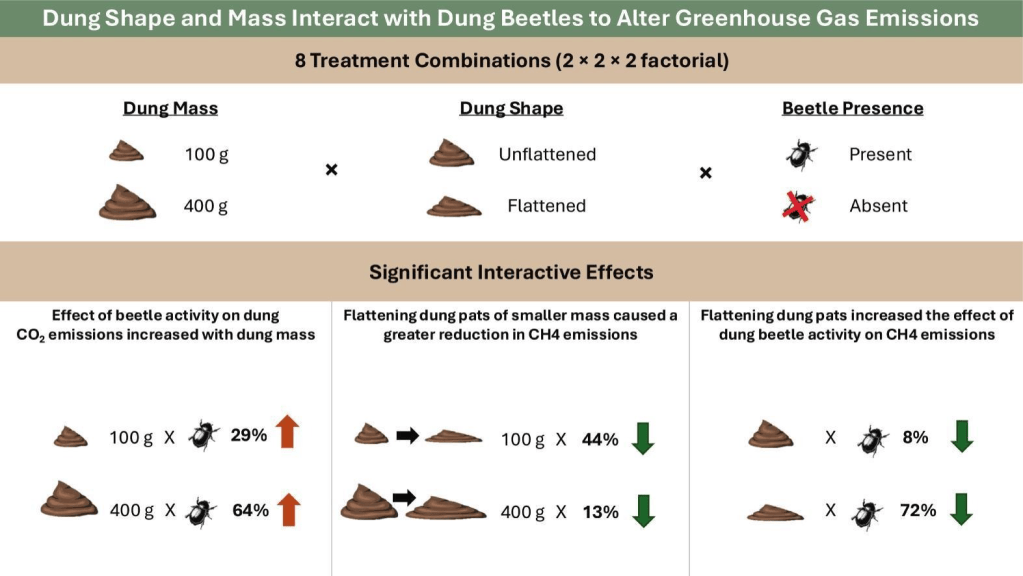
What does this all mean? Speaking for the team, I think that we’re probably underestimating the impact of beetles. When you’re setting up an experiment – you are trying to keep things tidy and uniform to limit variability, such that we can detect an effect if its occuring. If we’re dealing with large dung volumes (up to 1.2 kg in some studies), and then flattening them – this can quickly take up a lot of space (which is about as universal of a constraint as you can find when trying to plan scientific research). Dung that is hitting the ground after falling some distance from the cow, tends to be on the flatter side – particularly if the forage is really lush, which means you get super flat dung pats.
We have some plans to keep looking at this interaction (beetles and methanogenesis in dung). When you’re trying to account for GHG emissions and identify nature-based solutions that can offset one of the most environmentally-intensive protein sources in the world, you’ve got to get the math right! You can’t get the math right, if your experimental system is too far removed from the real-world environment.
Really proud of you Sam for running with this ambitious experiment. Good luck as you enter back into the world of academia and start your PhD with Rob Buchkowski at Western University (London, ON, Canada). It’s going to be awesome! ^_^
So if you’re up for it, you can read the article in all its fine detail over at Science of the Total Environment.
Reference:
Bennett, S., Burton, D., Lumactud, R., Manafiazar, G. & Manning, P. (2026) Disentangling the effects of dung pat shape and mass on greenhouse gas emissions in the presence of dung beetles. Science of The Total Environment, 1051, 182273.
Discover more from Insect Biodiversity in Agroecosystems Lab
Subscribe to get the latest posts sent to your email.
