
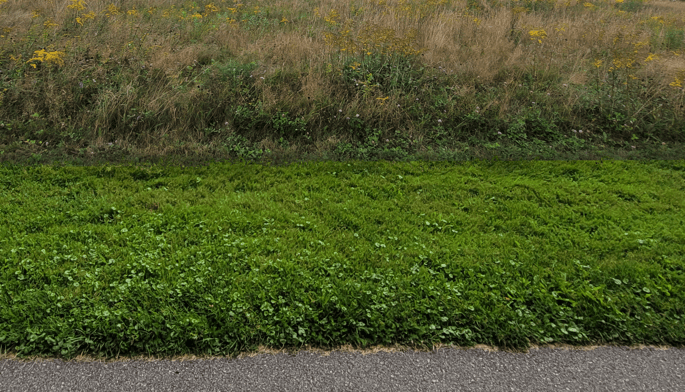
No-mow green spaces are areas intentionally left uncut to allow grass and other vegetation to grow naturally, creating more structurally and ecologically diverse habitats. These spaces support biodiversity by providing shelter and food for insects, small mammals, birds, and other animals.
Additionally, no-mow areas require less maintenance, leading to lower greenhouse gas emissions from lawn equipment and reduced costs for labour and fuel. By promoting a more natural landscape, no-mow green spaces also enhance aesthetic and recreational value, contributing to a healthier, more sustainable environment.
We are currently conducting research into understanding how members of the wider campus community perceive these green spaces.
 Insect Biodiversity in Agroecosystems Lab