
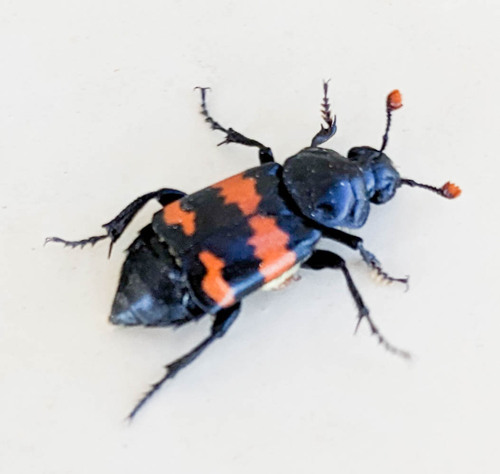
Burying Beetles
Clue:
I eat dead things like birds, mice, squirrels and frogs. I bury them in the soil. Some people call me a “graveyard beetle.”
Nicrophorus beetles, also called burying beetles, are remarkable scavengers that use small dead animals such as mice or birds to raise their young. A male and female often work together to bury the carcass underground, remove fur or feathers, and prepare it as food for their larvae. They coat the carcass with antimicrobial secretions that slow decomposition and reduce competition from microbes. These beetles provide extensive parental care, feeding and protecting their offspring until they mature, which is unusual among insects.

Rosy Maple Moth
Clue:
I am part of a group called the giant silk moths. While I’m not as big as some of my relatives, I have no mouth! I do all my eating as a caterpillar. After I mate and lay eggs, I die a few days later.
The rosy maple moth is one of North America’s most colourful moths, recognized by its bright pink and yellow wings. Adults are nocturnal and are commonly found around maple forests and suburban areas with host trees. Caterpillars, called greenstriped mapleworms, feed mainly on maple leaves and occasionally oak. Despite their striking appearance, adult moths do not feed and survive only about a week, focusing entirely on reproduction. Their vivid colours may help disrupt the outline of the moth against flowers or leaves during the day.
Giant Water Bug
Clue:
I like to eat frogs, tadpoles, fish, and other insects. I’m one of the biggest bugs you can find in North America.
The giant water bug, sometimes called a “toe-biter,” is one of North America’s largest aquatic insects. It is a powerful predator that hunts tadpoles, fish, insects, and other aquatic animals using grasping front legs. The bug injects digestive saliva into prey and then sucks out the liquefied tissues. Adults can fly well and are often attracted to lights at night. Although they usually avoid humans, they can deliver a painful bite if handled carelessly. They are important predators in freshwater ecosystems.
Scooped Scarab
Clue:
I am an insect and I eat poop.
Scooped scarabs are dung beetles that feed on and bury animal dung, helping recycle nutrients back into the soil. Many species sculpt small brood balls from dung and place them underground as food for their developing larvae. By burying manure, these beetles reduce parasite populations, improve soil aeration, and help disperse seeds. Some species possess horns used in competition between males. Scarab beetles are highly important in agricultural ecosystems because they can rapidly remove livestock dung from pastures and improve overall soil health.
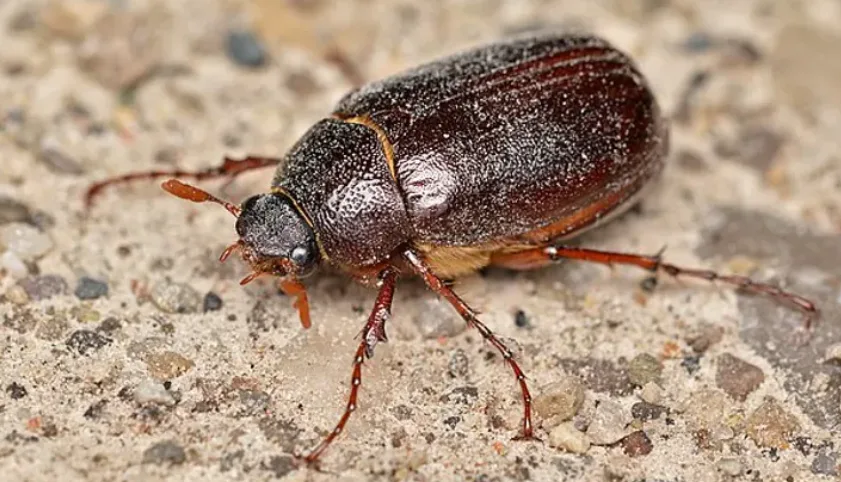
June Bug
Clue:
I spend lots of time in the soil eating grass roots. For a couple of weeks each year, you might find me tapping at your window.
The June bug, Phyllophaga anxia, is a common scarab beetle found across much of North America. Adults emerge in late spring and early summer and are strongly attracted to lights at night. They feed on the leaves of trees and shrubs, while their larvae — called white grubs — live underground and feed on plant roots. In large numbers, grubs can damage lawns, crops, and pasture plants. Their life cycle may take two to three years to complete, with most of that time spent developing beneath the soil surface.
Virgin Tiger Moth
Clue:
Because of my bold wings, I share my name with a stripey wildcat!
The virgin tiger moth is a strikingly patterned moth with white forewings marked by bold black lines and colourful orange hindwings. Caterpillars are fuzzy “woolly bears” that feed on a variety of low-growing plants such as dandelions and clover. Like many tiger moths, the species uses warning colours and defensive chemicals to discourage predators. Adults are nocturnal and are often attracted to lights during summer. Their bright hindwings may startle predators when suddenly exposed during flight, helping the moth escape attacks from birds.
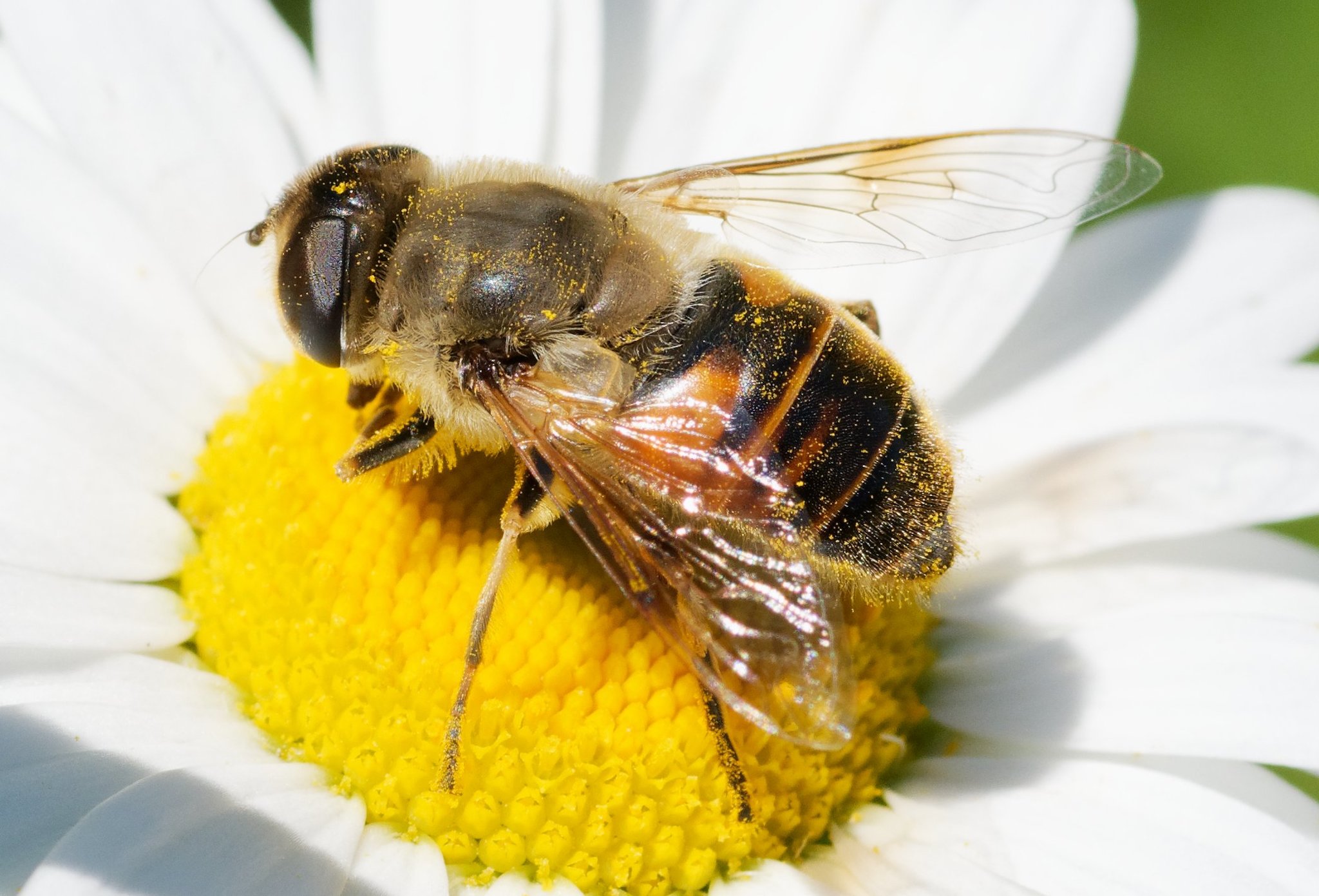
Drone Fly
Clue:
I might look like a bee, but I am actually a fly!
The drone fly is a hoverfly that closely resembles a honeybee, an example of protective mimicry that discourages predators. Adults feed on nectar and pollen and are important pollinators in gardens and agricultural systems. Their larvae, known as rat-tailed maggots, live in stagnant or nutrient-rich water and breathe through a long tail-like siphon that reaches the surface. Because they can tolerate polluted habitats, drone flies are often found near ponds, manure lagoons, or drainage areas. Adults are excellent fliers and can hover with precision.
Tri-coloured Bumblebee
Clue:
I am a queen! Once my nest is up and running, my daughters do all the work for me!
The tri-coloured bumblebee is a striking native pollinator found across much of Canada and the northeastern United States. Queens are especially recognizable by their yellow thorax, black band, and reddish-orange abdomen. Colonies are annual and begin each spring when queens emerge from hibernation to establish nests underground or in grassy areas. Workers forage on a wide variety of flowering plants and contribute significantly to pollination in forests, gardens, and agricultural landscapes. Their fuzzy bodies are highly effective at carrying pollen between flowers.
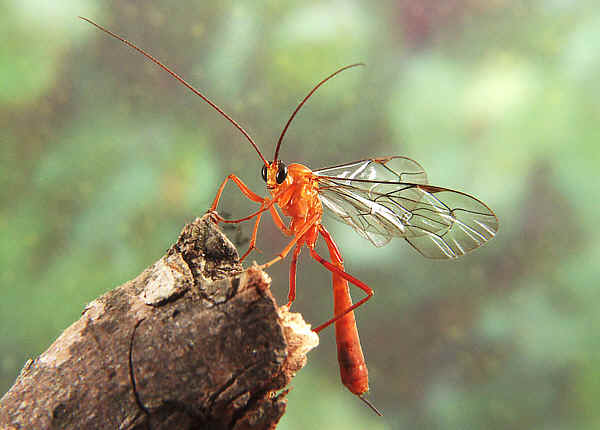
Ichneumonid Wasp
Clue:
I am a parasitic wasp! I use my long egg-laying organ (called an ovipositor) to drill through wood, and lay eggs inside other insects!
Ichneumonid wasps are a massive group of parasitoid wasps that play a major role in controlling insect populations. They are very diverse and can be quite difficult to identify to species. Females use a specialized egg-laying structure called an ovipositor to place eggs on or inside host insects such as caterpillars, beetle larvae, or spiders. The developing wasp larvae slowly consume the host, eventually killing it. Many species are highly specialized and target only a narrow range of hosts. Although they may appear intimidating, ichneumonid wasps are harmless to humans and are valuable natural enemies in forests and agricultural ecosystems.
Winter Firefly
Clue:
You might see my family members flashing at the tops of trees in the early summer. My name might have you believe I’m a fly, but really I’m a beetle!
The winter firefly is an unusual firefly species active during cooler months rather than summer nights. Unlike many fireflies, adults do not produce flashing light displays. Instead, they are often seen crawling on tree bark during mild winter days, feeding on sap or other sugary substances. These beetles overwinter as adults, allowing them to take advantage of times when predators and competitors are less active. Their dark bodies and orange markings help distinguish them from other beetles found on tree trunks in winter forests.
