
New research from our lab has been published – led by PhD student Alexe Indigo. Alexe brings a wealth of knowledge about botanical dyes – and combined this background with her interest in insect ecology. This work was based on Alexe’s BSc Honours thesis. (If you’re an undergraduate student reading this – think about doing an Honours project)!
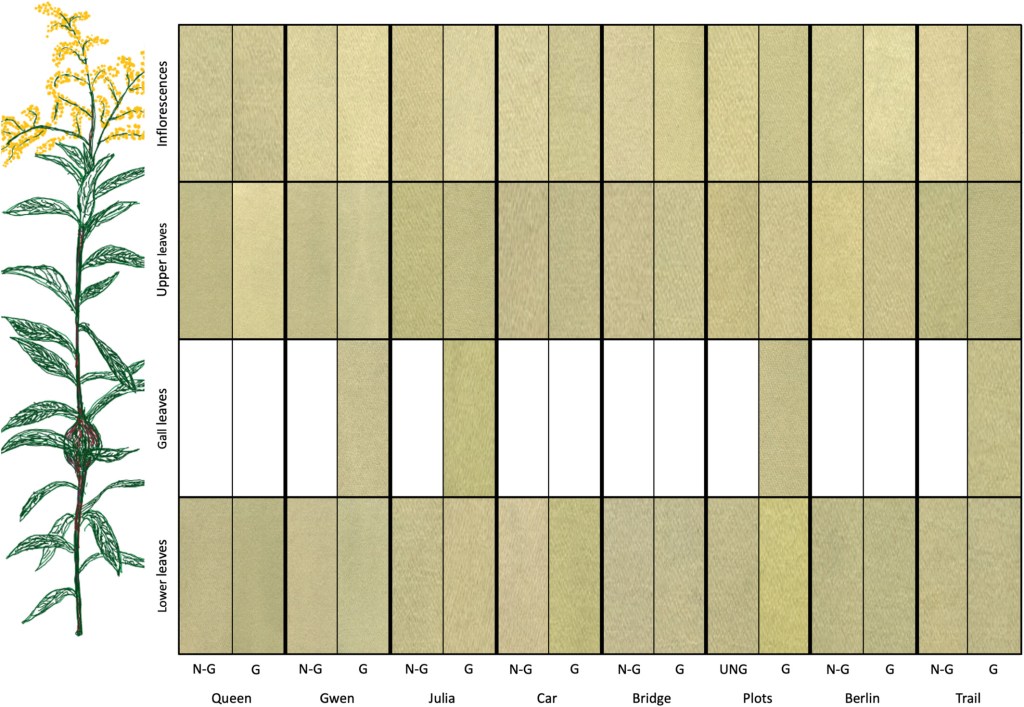
Currently, there is huge interest in the use of botanical dyes. Botanical dyes have many advantages over synthetic chemical dyes with respect to their environmental sustainability. Goldenrod (Solidago spp.) is widely used as a dye plant, but the impact of insect herbivory on its dye properties remains unexplored. This study examines how the stem-galling insect Eurosta solidaginis affects dye strength and colour. The goldenrod gall fly causes ball-shaped swellings that intercept nutrients as they pass through the plant. Could this interception also impact the flavanols that give goldenrod its characteristic colour? To find out, we looked at the difference between dyes made from leaves on plants with and without galls.
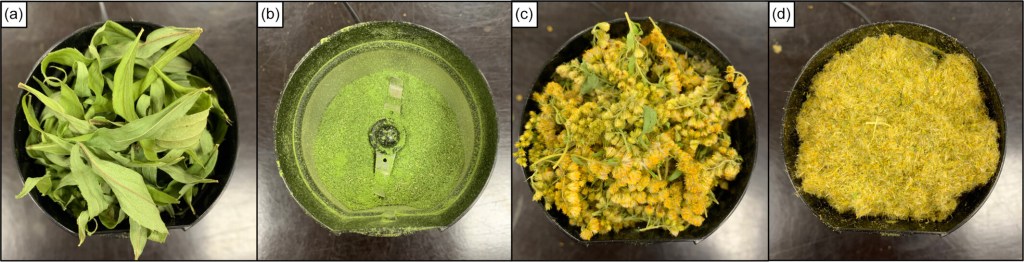
Colorimetric analysis showed that galling altered color differences between upper and lower leaves, while spectrophotometry indicated no significant increase in total phenolics in the dyes. These findings show that insect herbivory can affect the properties of botanical dyes – which seems to be a first. Perhaps artists could find a way to build this variation into their creative work?
If you think this work is as exciting as I do, then check it out. It’s published over at Plants, People, Planet – a really wonderful multidisciplinary journal about plants and humanity. Very proud of this work, and to have collaborated with the wonderful Xiaohong Sun in the process.
 Insect Biodiversity in Agroecosystems Lab